

In an industrial food processing environment, cross-contamination isn't just a minor set-back, it's a multi-crore rupee liability that can shut down operations overnight. Whether you are dealing with raw allergens, microbial pathogens, or physical debris, separating your cleaning zones is non-negotiable.
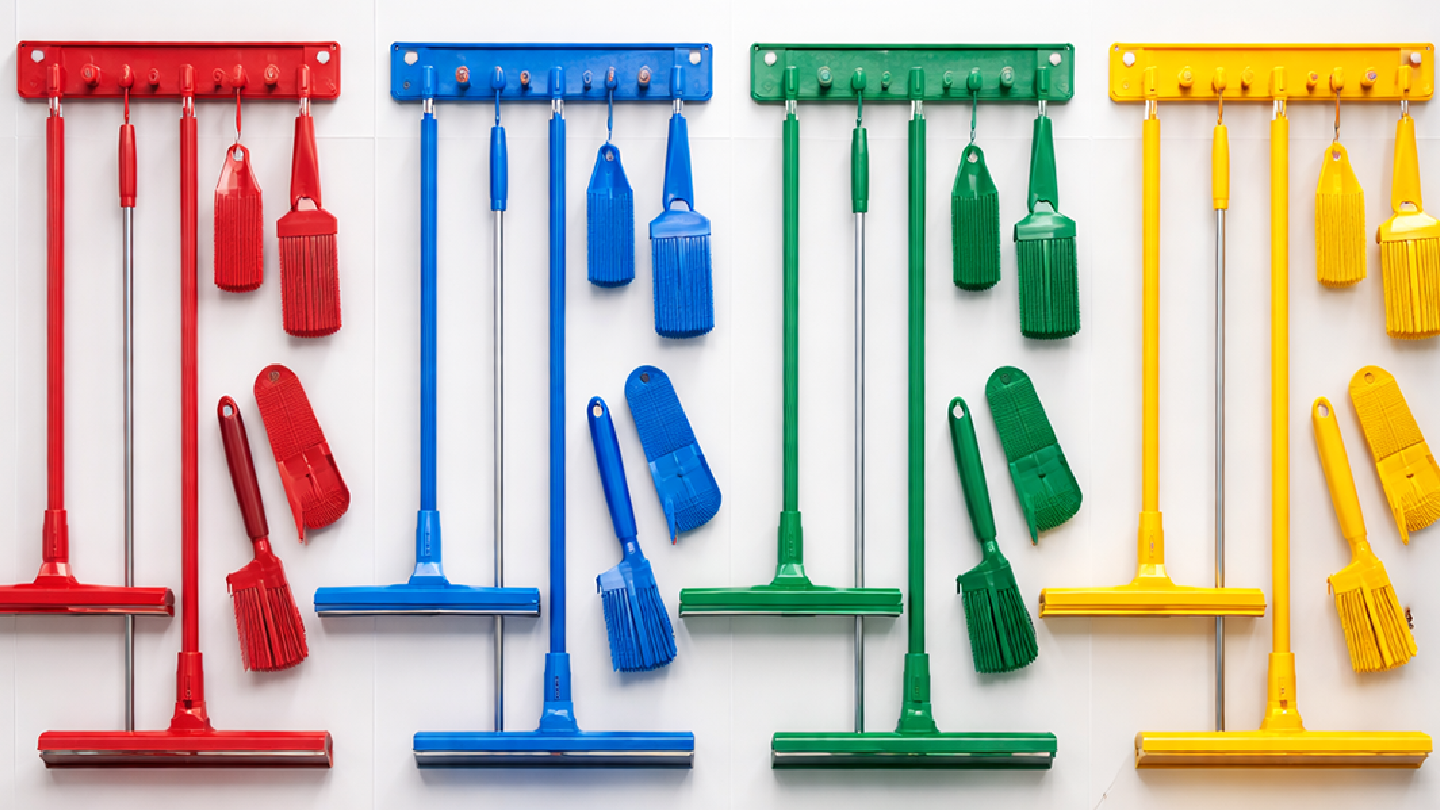
That is where a Hazard Analysis Critical Control Point (HACCP) colour-coding system comes in. By assigning specific colours to designated zones or shifts, you create a visual barrier against cross-contamination.
But a colour-coded plan is only as good as the tools you use to enforce it. Cheap, porous retail brushes shed bristles and harbor bacteria, completely defeating the purpose. Here is how to select true food-safe cleaning equipment that actually protects your production line.
The Core Rules of a HACCP Colour-Coding System
When designing your facility's colour layout, simplicity is key. A standard setup often follows this structure:
• Red: Raw meat / high-risk pathogen zones.
• Blue: Seafood / low-risk processing zones.
• Yellow: Allergen handling or specialized packaging lines.
• Green: Fruits, vegetables, or general environmental cleaning.
• White: Food contact surfaces and cleanroom areas.
Pro Tip: Never mix your floor cleaning tools with surface contact tools. Even if they are the same colour, a lobby pan or deck scrub should never sit on the same storage rack as a dough scraper or food-contact hand scoop.
What Makes a Cleaning Tool Truly "Food-Safe"?
When procurement teams look for industrial brushes and squeegees, they often focus solely on the price tag. However, regulatory auditors look for structural integrity. True food-grade tools must feature:
- Fully Non-Porous Materials: Look for solid polypropylene blocks that resist moisture absorption and chemical degradation.
- Bristle Retention Technology: Standard stapled bristles can easily work loose and end up inside packaged food. Professional tools use resin-set or secure-anchored bristles to prevent physical contamination.
- Smooth, Ergonomic Design: Sharp internal corners or hollow spaces inside handles accumulate organic residue, creating a perfect breeding ground for biofilms.
Implementing Your New Hygiene Framework
Transitioning your facility to a high-standard visual workflow requires clear boundaries and worker accountability:
- Define the Zones: Map out exactly where the colour boundaries begin and end.
- Install Wall Holders: If green sweepers and deck scrubs are left on the floor or thrown in a random corner, they accumulate filth. Store them on designated colour-matched wall brackets.
- Train the Team: Ensure that line operators understand why a blue squeegee can never cross over into a yellow allergen line.
Conclusion & Your Next Steps
Upgrading your sanitation arsenal doesn't just ensure compliance with FSSAI or international ISO standards, it fundamentally safeguards your consumer trust.
At Duke Thomson’s, we partner with global leaders like Fyens Børste- & Kostefabrik (FBK) to bring world-class, certified professional cleaning tools to the Indian market. From heavy-duty sweepers and scrapers to colour-matched measuring jugs and shovels, we have everything you need to build a flawless, fully compliant colour-coded facility.
👉 Explore the Full FBK Professional Cleaning Range on Duke Thomson’s


